Inclusive performances embrace differences regardless of barriers
, Lianhe Zaobao
What does an inclusive performance mean? When we watch this kind of performance, do we want to see a brave, heroic narrative, or are we watching through a lens of compassion? With the art world increasingly embracing diversity, bringing performers and audiences with different needs into the art space, it is worth thinking about how we can watch, create and perform inclusive works.
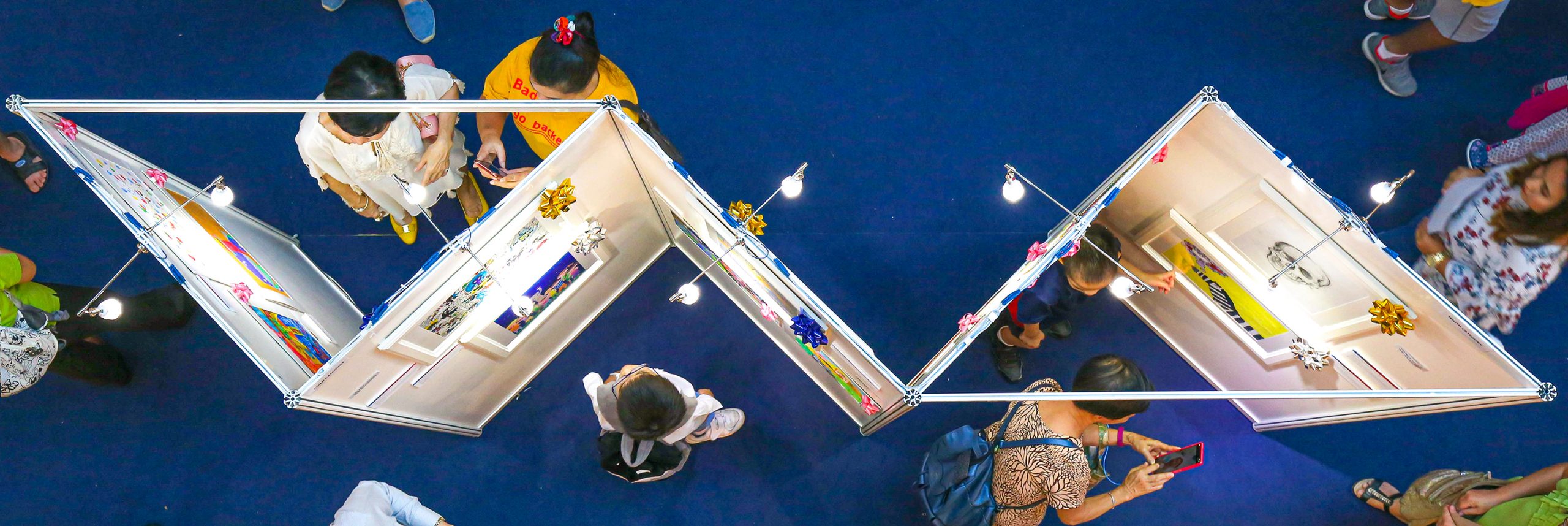
The Singapore Art Museum has recently played an important role in this field, through the collaboration with non-profit organisation ART:DIS (Arts & Disabilility) Singapore for Performing Normal, a participatory project that consists of art workshops and performances. It is part of Care Index, an art research project led by artist Alecia Neo to explore what care means and how people give and receive care.
Through ART:DIS in 2023, she was introduced to Claire Teo (a visually impaired actor-educator), Germaine Goh (an autistic dancer) and Jaspreet Kaur (a dancer with Down syndrome). The four of them cooperated initially to stage an incubation workshop. But with multiple iterations and interest from audiences, the Singapore Art Museum came on board as a platform for increased visibility.
Accepting care and giving care
For Claire, caring is about the willingness to learn and change old ways. For Jaspreet, caring is about speaking for those who cannot speak. For Germaine, caring is about learning from one’s own mistakes.
When we think about care, what is the first word that comes to mind? These conversations were the starting point, leading them to develop a series of participatory workshops performed at the Singapore Art Museum in June and July 2024. After listening to their stories, audiences are invited to participate in the performance. For example, after sharing her experience as a visually impaired person navigating life, Claire paired audience members together, requesting one to close his/her eyes while the other acted as a sighted guide. The process is delicate, intimate and caring.
Alecia recalled: “These workshops focused on how the 3 artists feel, receive and give care in their lives. People often have the misconception that persons with disabilities are unable to give and can only receive care, but through their stories you will realise that each of them do care for others in their own unique way.”
In November 2024, Alecia proposed that Claire record an audio narration for a guided tour of Singapore Art Museum’s exhibition Lost & Found: Embodied Archive. “Her voice is very powerful but she was apprehensive for taking on such a big responsibility,” Alecia explained. After some encouragement though, Claire felt empowered to tackle the task and she produced the guide, leading audiences to wander around the museum, encountering various works of art through her lens as a visually impaired person.
“In fact for this iteration of Performing Normal, we purposefully set up Jaspreet and Germaine as works of art because persons with disabilities are often objectified. In calling such behaviour out, we hope to create better awareness about how we can treat disabled persons with more care,” Alecia added.
For Alecia, the best part about this collaboration was that everyone in the team realised how their choices will affect others in the same space. Giving an example, she shared: “As the audio narrator, Claire needs to know the precise steps in a dance sequence to write & record the script for it, but Jaspreet and Germaine love to improvise as dancers. During rehearsals, Jaspreet had voiced several times that she would just like to move as she pleases. Claire would then explain that if she does so, Claire herself would not be able to participate in the project and Jaspreet understands.”
Listening to each other, negotiating and being tolerant – these are all expressions of care and are necessary elements for any kind of cooperation to take place.


Letting go of prejudices and reflecting on yourself
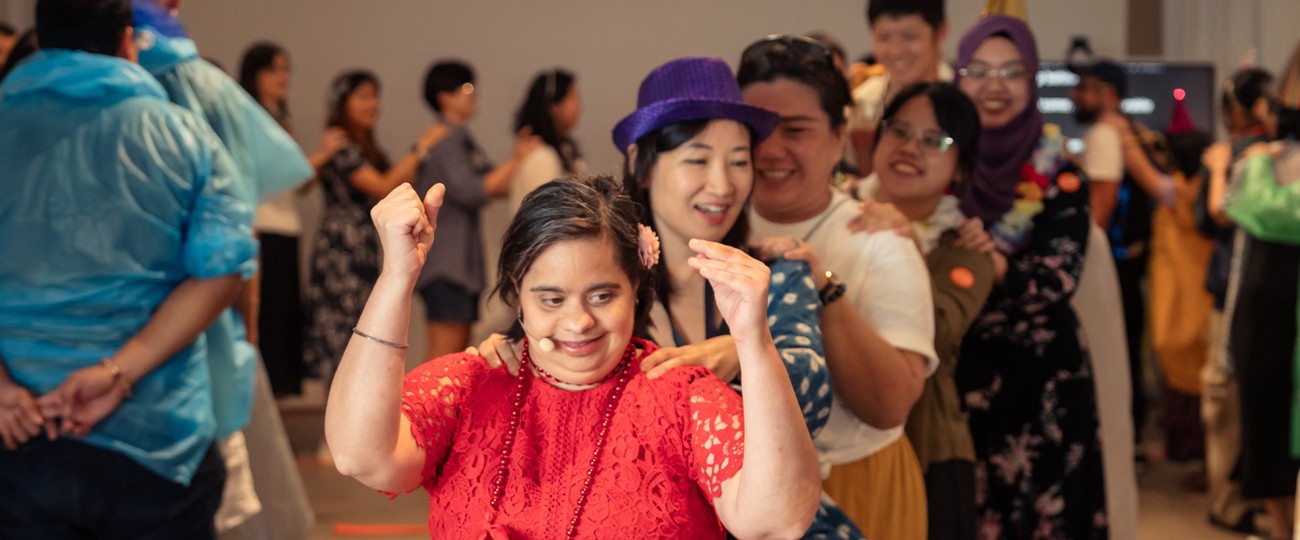
The performance The Usual Party in March this year was a culmination of this year-long project, with Jaspreet and Germaine as the lead performers. “It was difficult for them to remember lines so this time, we improved a lot and enabled them to perform according to their preferences,” explained Alecia.
In Germaine’s segment, she encouraged audiences to embrace the parts of themselves they dislike or keep hidden, calling them ‘monsters’. Her monster is called ‘Gaga’ and it surfaces whenever she encounters something difficult because of her autism. Inviting audiences to dress up as their monsters, some later shared that their monsters were productivity or social anxiety.
Alecia believes that this participatory performance allowed people to see Germaine and Jaspreet as unique individuals without labels. Many audiences were initially confused at the start of the performance, but they soon put aside their prejudices to reflect on their feelings. “I was fortunate to eavesdrop on conversations amongst the audiences and some said they were actually uncomfortable with participating. They went on to explain why and right there, I thought we’d achieved our goal because there is now open dialogue through engagement with the performance.”
Alecia observed that providing professional training for artists with disabilities requires a completely different approach. For instance, autistic individuals require advance planning and repeated practice in order to excel. If there are sudden changes in the script, stage design or dance movements, it will come as a shock, making it difficult for them to accept. “If artists with disabilities are given enough time and the right support, they can thrive.”


