

Play Invisible refuses to ghettoise disability
, Straits Times
Receiving the script for Invisible, 46-year-old Jaspreet Kaur Sekhon found herself assigned the character of a proud, uppity hotel guest, with obnoxious lines such as, “What’s the meaning of this?” and “I’m waiting.” Nothing made her happier. As a person with Down syndrome, it was her chance to play against type and unleash her inner diva. Better that she is doing so with mainstream actors having to bend to her will.
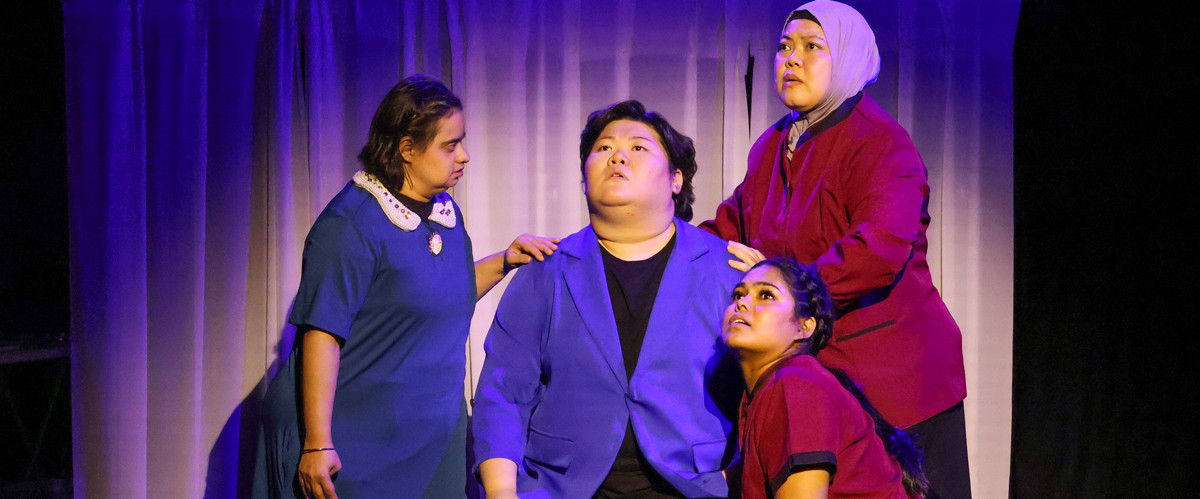
Invisible is a play set in a hotel where a young disabled woman is starting a new job as a hotel cleaner. It puts Sekhon alongside non-disabled actors Dalifah Shahril, Deonn Yang and Periyachi Roshini.
Playwright Haresh Sharma has refused the obvious choice of pigeonholing Sekhon in the role of the disabled hotel staff. The 75-minute commission for the Singapore Fringe Festival 2026 plays at the Esplanade Theatre Studio from Jan 21 to 25, a collaboration between theatre company The Necessary Stage (TNS) and non-profit ART:DIS.
Sharma says: “When I was writing the play, I had two questions. Does the play have to be about Down syndrome? And since we can go against race and gender – because there are female actors playing male characters and Indian actors playing Chinese characters – why can’t Jaspreet play an affluent woman who stays at the hotel?” Sekhon has been given the responsibility of driving the story’s action – and perhaps prejudice – as her loss of a prized possession sparks a game of careless blame.
ART:DIS Head of Performing Arts Peter Sau, who facilitated the project, says watching Sekhon slam a file onstage has been empowering. “We realise this is something we should not be surprised by in real life. Disabled people should play lawyers, doctors, someone of power and authority, and not just infantilised, babyish, helpless, vulnerable characters that will only further entrench our expectations.”
Sau is full of praise for TNS, the rare mainstream theatre company that has taken on projects with disabled artists. Singapore’s theatre ecosystem remains ableist, he says. However, its experiments with accessibility features like embedded narration – where the scene setting and characters are amply described in the script to help those who are blind – can serve as role models for theatres elsewhere.
He hopes for a more widespread commitment to devote resources integrating disability into theatre. He adds: “You have to pay more for an interpreter working with someone who is deaf. You spend more time with someone with an intellectual disability. You use tactile sensations to guide an actor who is blind. We are trying very hard to plant seeds of accessible theatre training, where the mainstream institutions aren’t able to give the time or the resources. With time, Jaspreet becomes an asset and not a deficit.”
Ghettoising disability does society a disservice, Sharma says. For him, disability is simply about people needing more help, but “at some point, we have all needed help”.