
Vision loss is not an obstacle to her dreams
, Shin Min Daily
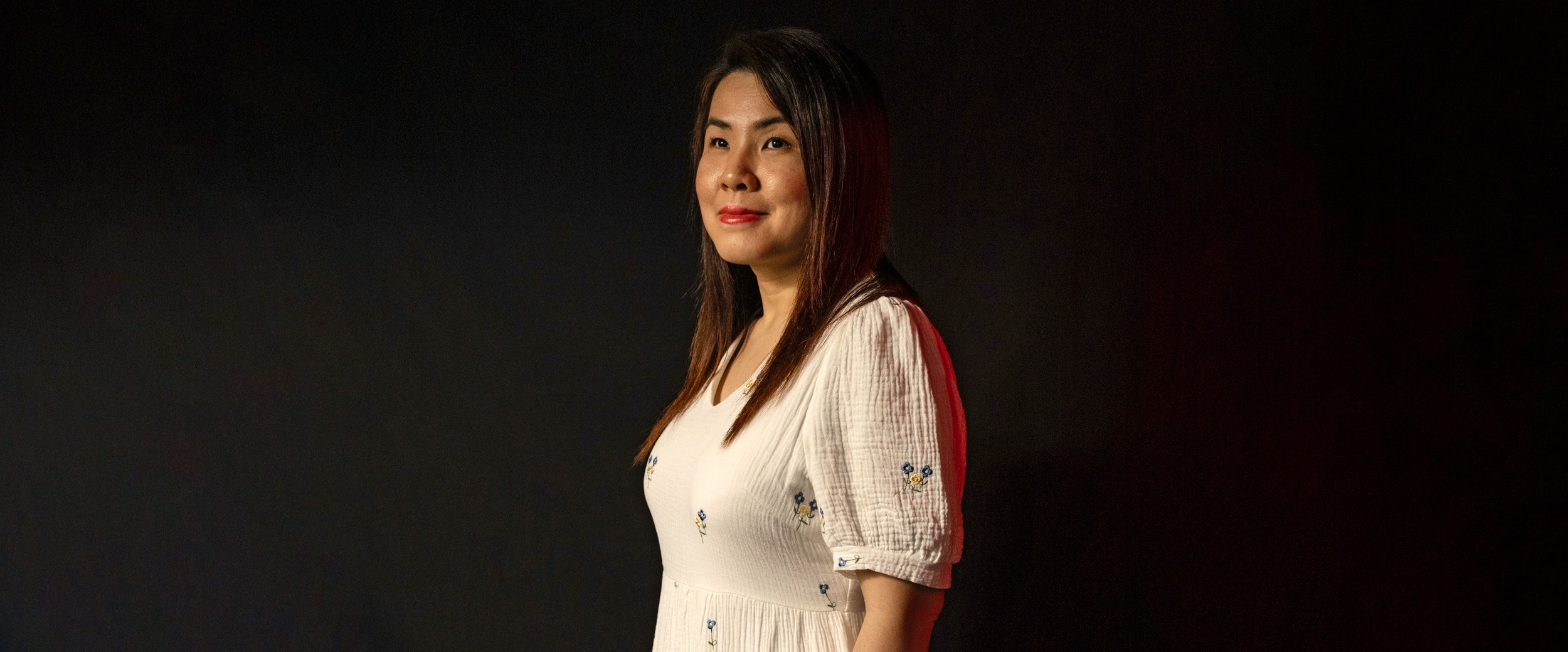
Amanda Yip recalled she had poor eyesight as a child. She even underwent corrective eye surgery at the age of 2 but her parents never thought there was a potential underlying medical issue – just, perhaps, a serious cause of juvenile myopia because there was no family history of eye diseases. However at the age of 4, together with her sister who was then 13 years old, they were both diagnosed with retinitis pigmentosa. This degenerative eye disease causes vision loss, leading to night blindness and tunnel vision.
Although just a child then, Amanda already understood her vision differed from her peers. It was as if her world was seen through a tube and the edges were slowly closing in, narrowing her scope of sight. For the past 15 years, her vision has deteriorated significantly. For instance before entering university, she could ride a bicycle. Such outdoor activities were no longer possible as the disease progressed.
“Now I rely mainly on my peripheral vision to see because my central vision is so blurry,” she said. To navigate, Amanda uses a white cane to find her way around places. Although it is challenging, she has adapted to this new lifestyle and is constantly learning to overcome obstacles to move independently. The mobile phone is also one of her greatest aids. For instance, she can use a magnifier on her phone to zoom into text, making it easier to read. She can also use the spoken content mode to have the phone read out text on-screen for her.
Amanda used to work in Human Resources but found that even though she worked hard, she was often passed over because of her disability. Having had enough of the corporate world and wanting to pursue her dreams instead, Amanda left her job. “I have always loved writing, acting, singing and painting. The arts enable me to express my true self, who I really am,” she shared.
During the Enabling Lives Festival, Amanda acted in 2 theatre performances by ART:DIS. In a monologue piece, she shared with audiences a story about a visually impaired woman who dreams of becoming a theatre star. In another performance, she acted as a middle-aged caregiver. After the performance, Amanda reflected that such platforms are important because it enable the public to learn more about the diversity within the disabled community, opening up conversations about different abilities and talents. “I hope people are able to realize that not all disabilities are the same. For example, not all visually impaired people experience complete blindness. In fact, some can see shapes or light,” she added.
Amanda believes there is more than one path in life. She hopes that her story will encourage more persons with disabilities to believe in themselves, nurture their passion and take a leap of faith. To Amanda, bravely taking the first step into the arts was more than just about pursuing a dream – it was about creating a rewarding career for herself.