A visually impaired actor stands proudly on stage
, Channel News Asia
Artist-educator Claire Teo is used to being called a role model but feels ambivalent. As the first visually impaired person in Singapore to graduate from a local professional theatre programme, she has been held up as an exemplar and was honoured at last year’s Goh Chok Tong Enable Awards. “If I am inspirational, does that mean the community doesn’t need any more help?” she told CNA in an interview before rehearsals for her latest production.
Ms Teo was diagnosed with retinitis pigmentosa at the age of four. The condition causes vision loss, with symptoms that include night blindness, loss of peripheral vision and colour deficiency. Now, what she can see resembles a kaleidoscope with a constantly moving array of patterns and colours in a space the size of a 10-cent coin. It took her years to come to terms with her disability. “I’ve always felt ashamed of my disability, maybe because I grew up with people telling me that I’m ‘poor thing’,” she said. “So if people keep telling me that I’m ‘poor thing’, then maybe I would feel ‘poor thing’ also.”
Mainstream theatre practitioners who have worked with Ms Teo “don’t know what to do with her” nor how to create access for people with disabilities, said Peter Sau, who is the head of performing arts and artistic development at ART:DIS, a non-profit organisation for persons with disabilities in the arts. In auditions, for example, actors with sight can perform lines they have just received by reading the script. But visually impaired actors like Ms Teo will need to get the script in advance so they can memorise it, he pointed out.
“They will then start to think, if this is going to be for (the) audition, does that mean it’s for the rehearsal as well? And for the show? So why do I cast someone who is so problematic?” Performers with disabilities have all the talents, they just need to have all the barriers removed. This means more time, planning, budget, and ultimately requires a change in the theatre ecosystem and drama schools,” he added.
Ms Teo credits Mr Sau with opening her eyes to what a disabled person in the arts could be capable of doing – for themselves and for others. “It’s not just entertainment, but it is about what change it can bring. It is not that I can’t be Christine Daae on Broadway,” she said, referring to the female lead of the Phantom of the Opera, which used to be her dream role. “But what more can I do? If I can write a new version of Phantom of the Opera and I can produce it in Singapore with a full cast of disabled people, then it is a bigger statement than what it is now.”
Advocating for the community
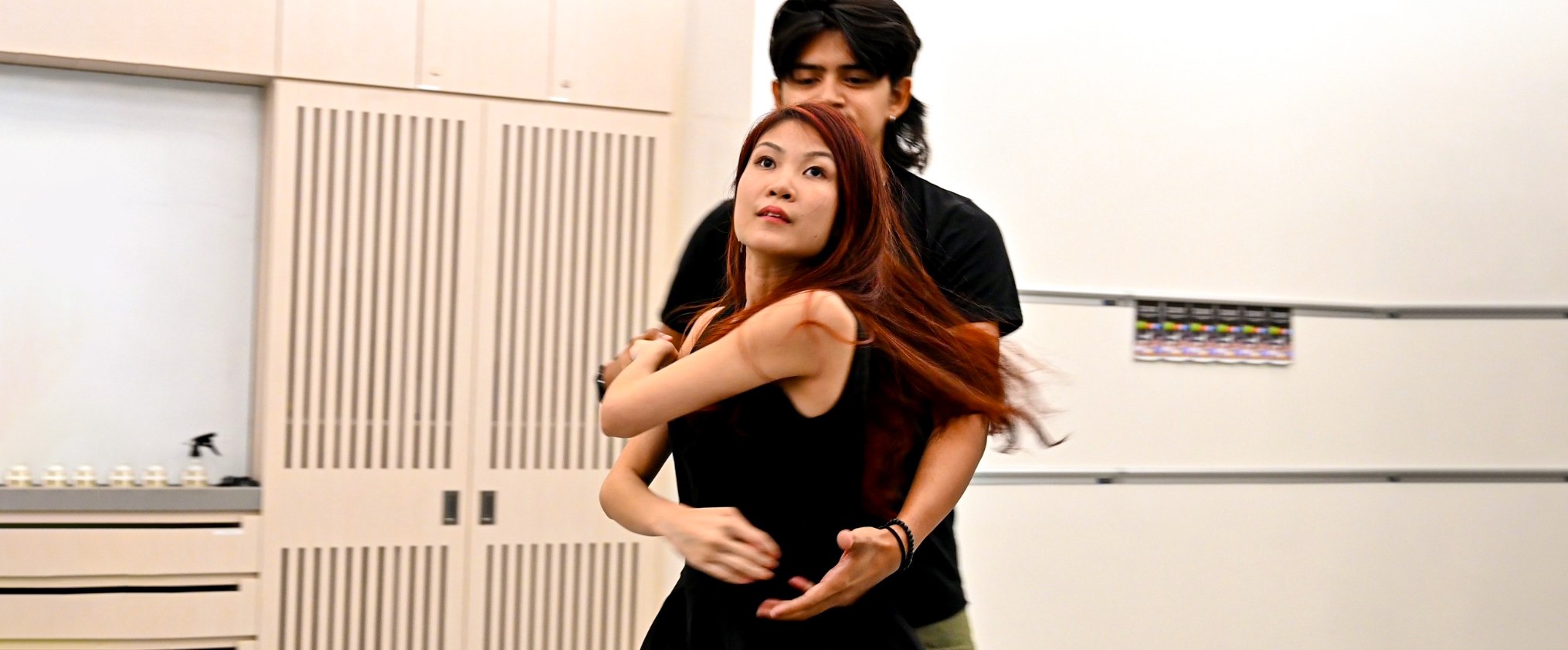
That vision is becoming a reality. Ms Teo and Mr Sau are working together on a disability-led music theatre production, Chachambo: Taking Flight, which stages at the Victoria Theatre next month. She is the playwright and lead actor, with him directing. She plays a young, visually impaired singer struggling to save an entertainment club while her mother’s legacy hangs over her.
The pan-disability cast comprises more than 90 performers across a range of disabilities and ages. The main cast of 11 includes persons with autism, Down Syndrome and muscular dystrophy as well as hearing and visually impaired performers. Ms Teo said the responsibility of developing a script that could showcase her fellow performers’ abilities scared, humbled and inspired her. Her fear comes from knowing just how important the play is for all involved.
“We have always been seen as charity cases,” she said. But this also means “we haven’t been (held) to a very high standard”. She hopes Chachambo can raise the bar for what is expected of disabled performers. The production is a “report card” showing what they can do, and “an audition for all of us into the mainstream world”.
When she is not in rehearsal, Ms Teo works as a programmes executive at Methodist Welfare Services and teaches drama at Lighthouse School and MINDS, where she tries to be a mentor to younger performers with disabilities. She said that many artists, herself included, do not want their disabilities to be highlighted and want to be recognised for their artistic work alone. “But because Singapore is not at a point of being fully inclusive yet, we need the labels to keep fighting for our rights,” she said.
Her hope is that Singapore and its arts scene will be more open to collaboration with persons with disabilities. “Disability is a catalyst for innovation and for creativity cecause you learn more from people you have never worked with, you will learn more from new perspectives, and the work you create will have more facades,” she shared.
Ms Teo now feels acceptance and pride towards her disability. “My eyesight, my disability makes me the person I am today. It gave me the chance, the knowledge to fight for people to bring more meaning into the work that I do.”