
Visually impaired chef with lupus pursues dream of acting
, Channel News Asia
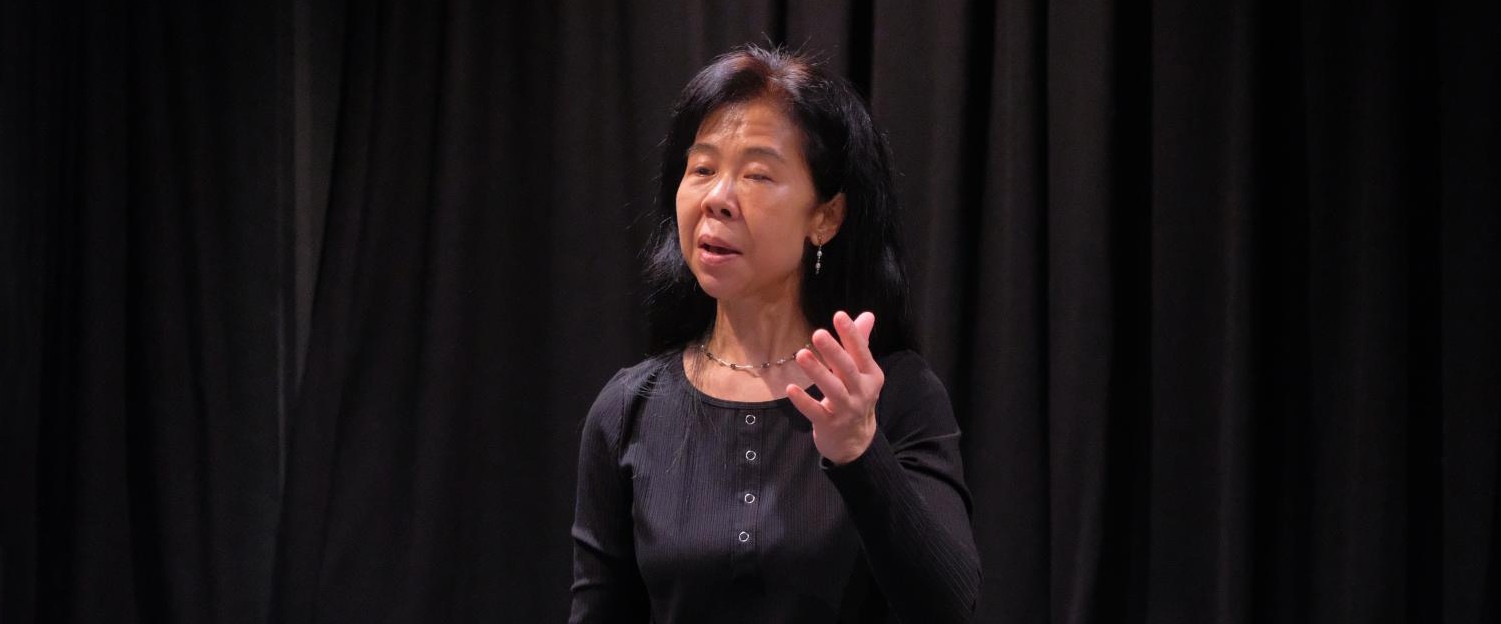
Odilia Ser is acting in a theatre performance – but unlike most performers, she does not need light to get around. She is blind in her left eye, and retains only five to 10 per cent of her vision in her right eye, with dark patches clouding her view. She can only make out bright, high-contrast colours and must angle her gaze carefully to avoid the blind areas.
She was 19 when her vision began to fade, and along with it, her dream of becoming an actress. So she put that dream aside, learnt braille, and took courses to enable to earn a living as a visually impaired person. Now, decades later, the 53-year-old, who also works as a junior chef in a hotel preparing ingredients for the chef, will make her stage debut at the Enabling Lives Festival, from Nov 30 to Dec 3 in an ART:DIS developmental play titled The Human Condition. The festival, organised by SG Enable, aims to promote accessibility, diversity, and inclusion in Singapore.
Living for her loved ones
Ser was in secondary school when she began experiencing fatigue and body aches. A few months into her studies at the National Institute of Commerce, the then-19-year-old realised she could not see what was written on the whiteboard in class. Her parents then took her to the hospital. There, she found out she had systemic lupus erythematosus – an autoimmune disease that explained her earlier discomfort, as its symptoms include constant fatigue and body aches. Lupus can also cause eye damage.
“The doctor told me I was likely going to lose my sight,” Ser said. “When I heard that, my world collapsed. There were so many things I wanted to do after I got my O Level certificate,” she told CNA Women. “I wanted to learn to drive, I loved Mandarin so I wanted to write in Chinese, I wanted to become a deejay, work in the media, or perform on TV or on stage – all cannot do anymore when I found out I couldn’t see.”
Due to her deteriorating eyesight, Ser had to quit school. By her late twenties, Ser had lost most of her vision. She was still in pain and felt fatigued due to her lupus but medication helped to manage the disease. Determined not to succumb to fatigue or lead a sedentary lifestyle, she sought ways to improve herself and adapt to her illness.
With her parents’ support and the subsidies she received from the government as a visually handicapped person, she learnt braille at the Singapore Association of the Visually Handicapped (SAVH) and enrolled in courses there to make a living. At SAVH, Ser also met her husband, a visually handicapped person who was a librarian there. “When I got married, I realised other life milestones I could still reach despite my condition,” she said. “I became a wife to a sweet man and a mother to a kind and understanding boy.”
Pursuing her passion for performing arts
In 2023, Ser encountered something she had never thought possible – a play performed by people with disabilities. Titled Chachambo: Taking Flight, it was a stage performance produced by ART:DIS, a non-profit organisation that develops people with disabilities through the arts. When Ser watched the play, which had accessible features like a narrator on stage providing audio descriptions, she was stunned. “I was so impressed and inspired. I never thought a blind person could be on stage and acting in theatre,” she said. “The interest I had for acting was suddenly alive again, and so I got my husband to send an email to the director.”
Following an audition and interview, Ser enrolled in the second cohort of BEYOND DIS:PLAY, a theatre training programme by ART:DIS. Despite the chronic pain and fatigue from her lupus, which Ser continues to manage with medication, she felt energised and refreshed after every training session, which can last five hours. The training includes vocal warm-ups and learning to express oneself. Ser described how Sau and the other directors, who are all trained in performing arts, adapt their methods to support performers with disabilities, such as Down syndrome, severe autism, and visual impairment. “Here, I didn’t feel like my blindness was a weakness – everyone worked with it,” Ser said.

The programme introduced Ser to acting techniques centred on body memory, using physical movements to retain steps, and experiential acting, where gestures evoke emotions, such as crouching in anguish or spreading the arms in joy. One technique for managing a diverse cast with disabilities is getting them to help one another. For instance, a cast member with Down syndrome might guide a visually impaired actor to their next position. Similarly, someone with a visual impairment could prompt the next scene’s opening lines to help an actor with autism recall the script. “It’s not about being efficient or getting things done in the fastest way possible,” she added. “It’s about meeting different people where they are.”
Regarding her upcoming stage debut, she told CNA Women: “I still can’t believe I’ll be on stage, performing in front of an audience. I never thought this could ever happen. I don’t want to let age or my condition stop me anymore. Thanks to such a supportive and kind community, even with my disability, I can still do a lot. I can still perform and become an actress, as long as I’m given the opportunity to do so.”